
Meeting Room vs Coworking Space: Which Should You Book?
Choose a meeting room when your group needs privacy, a shared screen or a reserved space for the whole discussion. A coworking day pass suits individual desk work, while a cafe can suit an informal conversation without sensitive material. In the meeting room vs coworking space comparison, check exactly what you’re reserving: access to a shared workspace and exclusive use of a room are different bookings.
Understand what each booking gives you
A coworking centre can contain both shared desks and private meeting rooms. You may find the right room inside one, but don’t assume buying a day pass reserves it for your group. Check room access, guest permissions and any separate booking charges before you commit.
Start with the activity you need to accommodate. If everyone will work independently, desk access may be enough; if everyone needs to follow the same discussion, assess a private room.
| Consideration | Private meeting room | Coworking day pass | Cafe |
|---|---|---|---|
| Best use | Planned group discussions and presentations | Individual work between appointments | Informal, non-sensitive conversations |
| Space to confirm | Exclusive room use for your booked period | Desk or shared workspace access | Table availability and reservation policy |
| Privacy check | Sound leakage, sightlines and entry arrangements | Whether a separate private room is available | Whether the conversation belongs in public |
| Presentation needs | Confirm the screen and laptop connection | Check whether room equipment costs extra | Plan around your own devices |
| Cost comparison | Room hire plus any extras | Passes for attendees plus any room charges | Purchases and any minimum spend |
Treat this as a booking checklist, rather than a guarantee about every venue. The actual room and its terms matter more than the category name.
Rent a room when the conversation needs privacy
For an interview, a performance discussion or a commercial negotiation, start by asking whether the conversation should happen within earshot of strangers. If you would hesitate to open the documents at a public table, reserve a private room. This also gives you somewhere to discuss changes without repeatedly lowering your voice.
An enclosed room still deserves a privacy check. Ask whether conversations carry into the corridor, whether screens are visible through glass and how other guests access the surrounding area. A door alone doesn’t establish acoustic privacy.
A cafe can be a pleasant choice for an introductory conversation when both parties are comfortable with the setting. Once the agenda involves confidential figures or a decision that needs sustained attention, move the discussion into a suitable room.
Choose around the screen and the remote guests
A shared desk can suit someone working on a laptop. A group reviewing a proposal needs a different assessment: can everyone see the detail, hear the speaker and contribute without crowding around a small screen? Check the presentation setup against the material you’ll actually use.
For a hybrid meeting, ask how remote guests will hear people seated away from the laptop. Confirm camera coverage and how presentation sharing works during the call. A room with a television may still need additional equipment for a useful group conversation.
Our guide to hybrid meeting room equipment explains what to check before choosing a venue. Include a test using your own laptop and meeting platform in your preparation, especially when external guests are joining remotely.
Compare the total booking cost
Compare quotes for the same agenda and attendance. For shared workspace access, establish whether every attendee needs a pass and whether external guests can enter. Then add any private room charge and equipment you need.
For a meeting room, confirm whether the quoted amount covers the whole group or applies per person. Ask about the minimum booking period and charges for technical support. Include parking and refreshments in your budget when they are paid separately.
A cafe comparison should include its reservation policy and any minimum spend. Consider whether the setting can accommodate your planned discussion without a change of table or an interruption. Choose it because it suits the agenda, rather than assuming a purchase secures a working space.
For a longer session, compare the venue’s hourly and day packages against your actual schedule. Our hourly, half day and full day meeting room rental guide helps you assess the booking period, including preparation and packing away.
Plan the arrival and the time around the meeting
A useful room booking begins before the first presentation slide. Confirm when the organiser can enter, when guests should arrive and when the space must be handed back. Keep those arrangements separate from the discussion’s start and finish times.
Check the seating plan against how people will work. A room suitable for listening to a presentation may need a different layout when everyone brings a laptop. Ask for the capacity in your intended arrangement instead of relying on the venue’s largest advertised guest count.
Make the arrival instructions specific enough for someone visiting for the first time. Include the building, tower and floor, along with the route from parking or public transport. Clear directions are particularly helpful when your guests are arriving independently.
Before paying, review cancellation and rescheduling terms. If the meeting might overrun, establish whether an extension depends on room availability and how it is charged. You can then set an agenda that fits the space you have reserved.
How Maxsmart Event Space fits this need
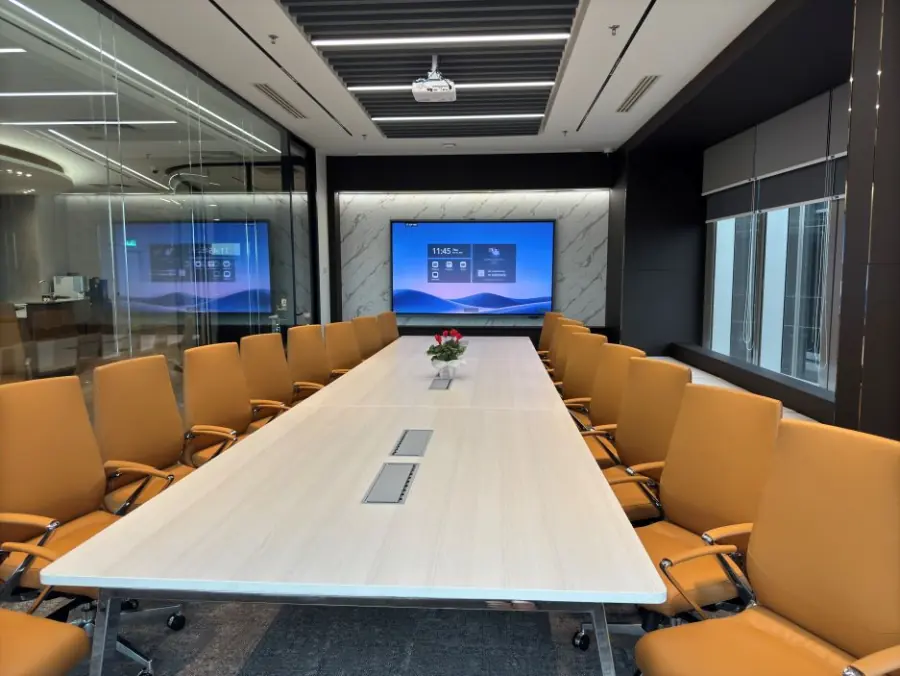
At Maxsmart Event Space, we host meetings at Level 13, Corporate Tower 2, Pavilion Damansara Heights, Kuala Lumpur. Nexus Executive Boardroom seats up to 18, with a 98-inch interactive display, camera and room audio for presentations and hybrid calls.
Nexus costs RM300 an hour, RM1,200 for a half day of 4 hours, or RM1,800 for a full day of 8 hours. Synergy Suite accommodates up to 72 in theatre style or 36 in classroom style, at RM600 an hour, RM2,300 half day or RM3,600 full day.
Both rooms have a 2-hour minimum, and listed prices include SST. Every booking includes screens, 1Gbps Wi-Fi, an on-site tech assistant, USB-C and wireless sharing, a smart whiteboard and filtered water. These details are listed on our venue and booking page.
FIRST50 gives eligible companies 50% off their first room booking when they book and hold the meeting by 31/12/2026. The weekend and public holiday fee remains payable at its usual rate; parking is separate and catering is on request.
Frequently asked questions
What is the difference between a meeting room and a coworking space?
A meeting room is a private space reserved for a group during a booked period. A coworking space provides shared workspace and may also offer private meeting rooms, so check which type of access your booking includes.
Does a coworking day pass include a meeting room?
Don’t assume it does. Check whether private room use is included, requires a separate hourly booking or depends on availability, and confirm whether your guests need their own passes.
Is a cafe suitable for a business meeting?
A cafe can suit an informal conversation without confidential material or presentation needs. For sensitive discussions or a structured group agenda, choose a private room and check its privacy arrangements.
Is a meeting room cheaper than coworking day passes?
Compare the total for the same group and duration. Include passes for attendees, any separate room hire and equipment charges, then compare that amount with a room booking that covers your requirements.
Should I book a meeting room for a video conference?
For a group joining remote colleagues, assess a room with suitable microphones, camera coverage and presentation sharing. If you’re joining alone, a suitable private booth or small room may be enough, subject to its booking terms.
For your next meeting, check availability and book at Maxsmart Event Space.